What cultural places to visit in Prague?


Prague is a city that will win you over at the first meeting and with each subsequent visit reveals new layers of its cultural identity. It is not just a tourist destination full of well-known monuments, but above all a living organism where history, art, architecture and everyday life have been intertwined for centuries. At every step you will come across traces of the past, which are naturally complemented by modern cultural trends.
Praha

Prague Castle

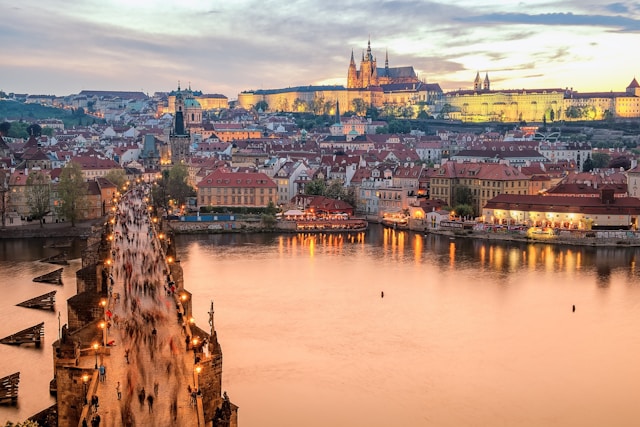
One of the places that you definitely cannot miss is Prague Castle. A symbol of Prague culture. It is a historical complex that is a sign of Czech statehood. It is also one of the largest castle complexes in the world. You will find beautiful architecture here, such as St. Vitus Cathedral, which has breathtaking Gothic architecture and a rich history.

Contemporary Art Center

The DOX Contemporary Art Center is located in a former factory hall in Holešovice. It focuses on contemporary art, architecture and social issues. The exhibitions here often reflect current events in the world. A visit will make you think about our society, discuss and perceive art in a broader context. You will also find a design shop, a café or an airship here.

Spanish Synagogue

The Spanish Synagogue is one of the most beautiful monuments of Prague`s Jewish Town. You can find it in Prague 1, just a few minutes from Old Town Square. The synagogue has a beautiful interior. It is designed in the Moorish style and the walls are covered with rich ornaments. You will also find colorful stained glass windows and it has a slightly exotic touch. The synagogue also has an organ and regular classical music Prague concerts are held here, organized by the Prague Orchestra.
noční Praha

Emmaus Monastery

The monastery was founded in the 14th century. It is associated with a significant chapter in Czech history. It has a unique appearance thanks to the modern towers that were built after World War II. They contrast sharply with the original Gothic building. Inside, you will see rare medieval frescoes and you can soak up the atmosphere of modern architecture.

What cultural places to visit in Prague?


Prague is a city that will win you over at the first meeting and with each subsequent visit reveals new layers of its cultural identity. It is not just a tourist destination full of well-known monuments, but above all a living organism where history, art, architecture and everyday life have been intertwined for centuries. At every step you will come across traces of the past, which are naturally complemented by modern cultural trends.

Praha

Prague Castle

One of the places that you definitely cannot miss is Prague Castle. A symbol of Prague culture. It is a historical complex that is a sign of Czech statehood. It is also one of the largest castle complexes in the world. You will find beautiful architecture here, such as St. Vitus Cathedral, which has breathtaking Gothic architecture and a rich history.

Contemporary Art Center

The DOX Contemporary Art Center is located in a former factory hall in Holešovice. It focuses on contemporary art, architecture and social issues. The exhibitions here often reflect current events in the world. A visit will make you think about our society, discuss and perceive art in a broader context. You will also find a design shop, a café or an airship here.

Spanish Synagogue

The Spanish Synagogue is one of the most beautiful monuments of Prague`s Jewish Town. You can find it in Prague 1, just a few minutes from Old Town Square. The synagogue has a beautiful interior. It is designed in the Moorish style and the walls are covered with rich ornaments. You will also find colorful stained glass windows and it has a slightly exotic touch. The synagogue also has an organ and regular classical music Prague concerts are held here, organized by the Prague Orchestra.

noční Praha

Emmaus Monastery

The monastery was founded in the 14th century. It is associated with a significant chapter in Czech history. It has a unique appearance thanks to the modern towers that were built after World War II. They contrast sharply with the original Gothic building. Inside, you will see rare medieval frescoes and you can soak up the atmosphere of modern architecture.